
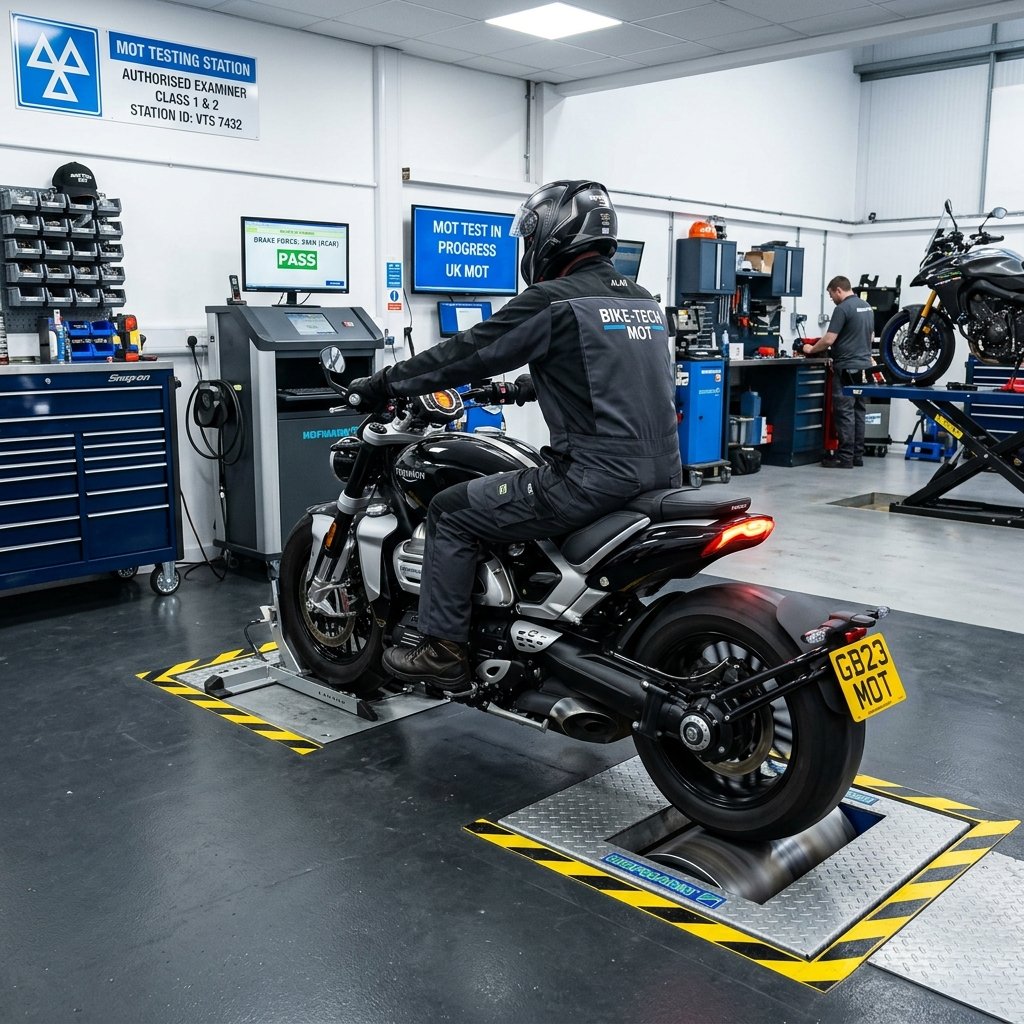
Motorcycles, scooters, and mopeds are subject to the same annual testing requirements as passenger cars, starting from the third anniversary of their first registration. However, because bikes have a completely different mechanical architecture, they are tested under separate vehicle classes with lower fee caps and a tailored inspection checklist.
Motorcycle MOT Vehicle Classes & Pricing Caps
| Motorcycle Class | Engine Capacity Criteria | Maximum Official Fee |
|---|---|---|
| Class 1 Motorcycle | Engine sizes up to 200cc | £29.65 |
| Class 2 Motorcycle | Engine sizes over 200cc | £37.80 |
| Class 2 with Sidecar | Bikes with sidecars attached | £37.80 (bike) + £13.60 (sidecar) |
Key Items Checked on a Motorcycle MOT
A motorcycle test is designed to ensure safety and emission control. The main inspection points include:
- Lights & Indicators: Secure and correct functioning of headlights, tail lights, indicators, hazard lights, and rear reflectors. (Note: bikes without indicators, such as off-road models, may be issued a 'daytime MOT').
- Steering & Suspension: Evaluation of headstock bearings, fork seal leaks, rear shock absorber wear, and swingarm play.
- Brakes: Pad wear, hydraulic lines, fluid levels, and brake efficiency tests on a specialist motorcycle rolling road.
- Tyres & Wheels: Minimum tread depth of 1.0mm (for bikes over 50cc), correct wheel alignment, and wheel spindle security.
- Exhaust & Noise: Exhaust system security, noise levels (must not be significantly louder than an OEM exhaust), and emission compliance.